
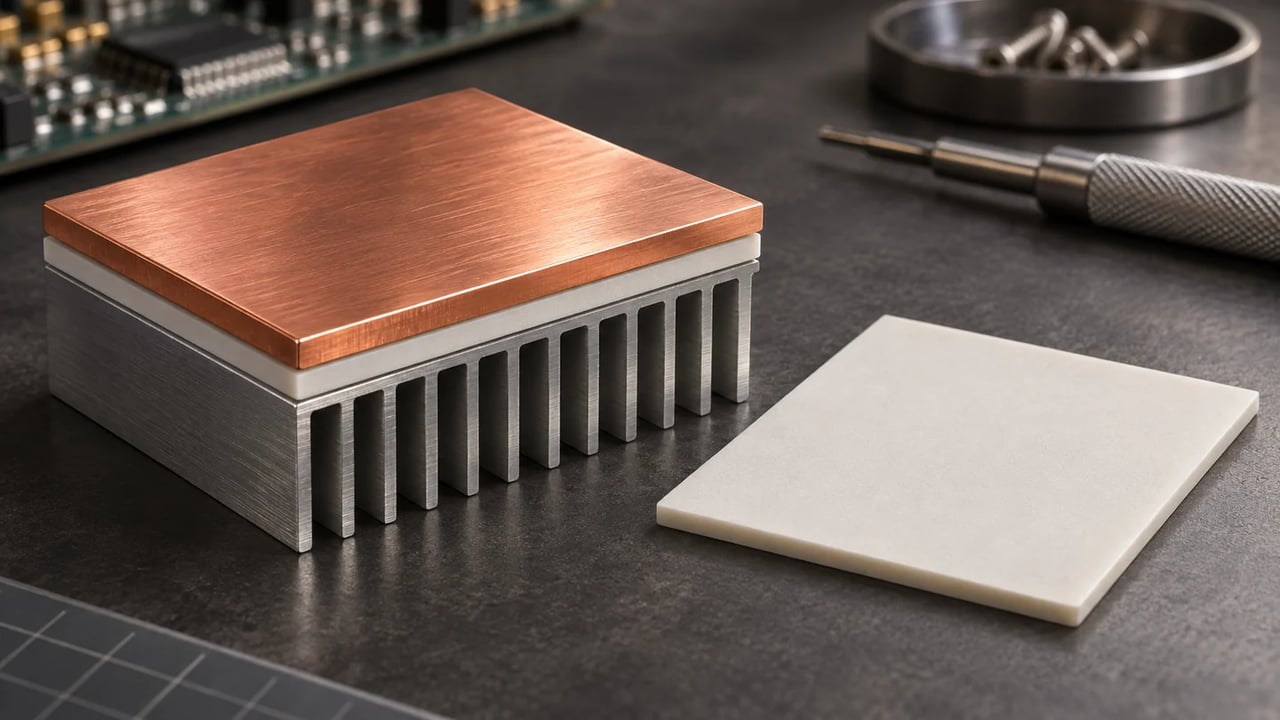
Aluminum nitride (AlN) is worth evaluating when an electrically insulating ceramic plate must carry substantial heat within a tight temperature budget. Alumina can be a practical choice when it meets the thermal and electrical requirements in the assembled stack. Compare specific grades at the relevant temperature and validate the complete assembly.
How do AlN and alumina compare in thermal conductivity?
CeramTec lists at least 170 W/(m·K) at 20 °C for its Alunit AlN HP substrate and lists 24 W/(m·K) for alumina in its substrate comparison. These are published values for that supplier’s materials. Use the proposed grade’s datasheet and agreed test conditions for procurement. The comparison gives no guaranteed value for a finished Jiwei component.
What should a buyer ask for in a thermal conductivity report?
Ask for the material grade, test temperature, method, sample identification and measurement direction when relevant. Clarify whether the number is a typical value or an agreed minimum. The flash method in ASTM E1461 measures thermal diffusivity. Conductivity can be derived from diffusivity with suitable density and specific heat data, so ask which inputs were used. If lot consistency matters, agree on sampling, lot identification and acceptance evidence before ordering.
How can you test performance in the assembled stack?
Define where the heat enters and leaves, then record plate thickness, contact area, interface material and clamp load. In a simplified one-dimensional model, the plate’s thermal resistance is thickness divided by conductivity times area, with conductivity and area together in the denominator. Contact layers add resistance. Test the stack at the intended heat load and measure the temperature difference between agreed points. Verify electrical isolation separately at the relevant voltage and environment.
Which conditions could change the material choice?
If the plate also slides, sees impact, or carries load at high temperature, evaluate wear, strength and thermal shock for the proposed grade and geometry. Confirm any cleaning or corrosive exposure against the specified medium, temperature and contact time. Measure flatness after the relevant thermal cycles if contact across the plate is critical.
What information should go into an RFQ?
Share the drawing revision, plate thickness and flatness, heat load and acceptable temperature drop, voltage and insulation test requirements, and details of the interface and mounting. Include sample and repeat quantities, plus any requested lot-level evidence. State whether you want the supplier to compare AlN and alumina for the same operating conditions.
Review aluminum nitride and alumina ceramics or discuss your thermal design with Jiwei.