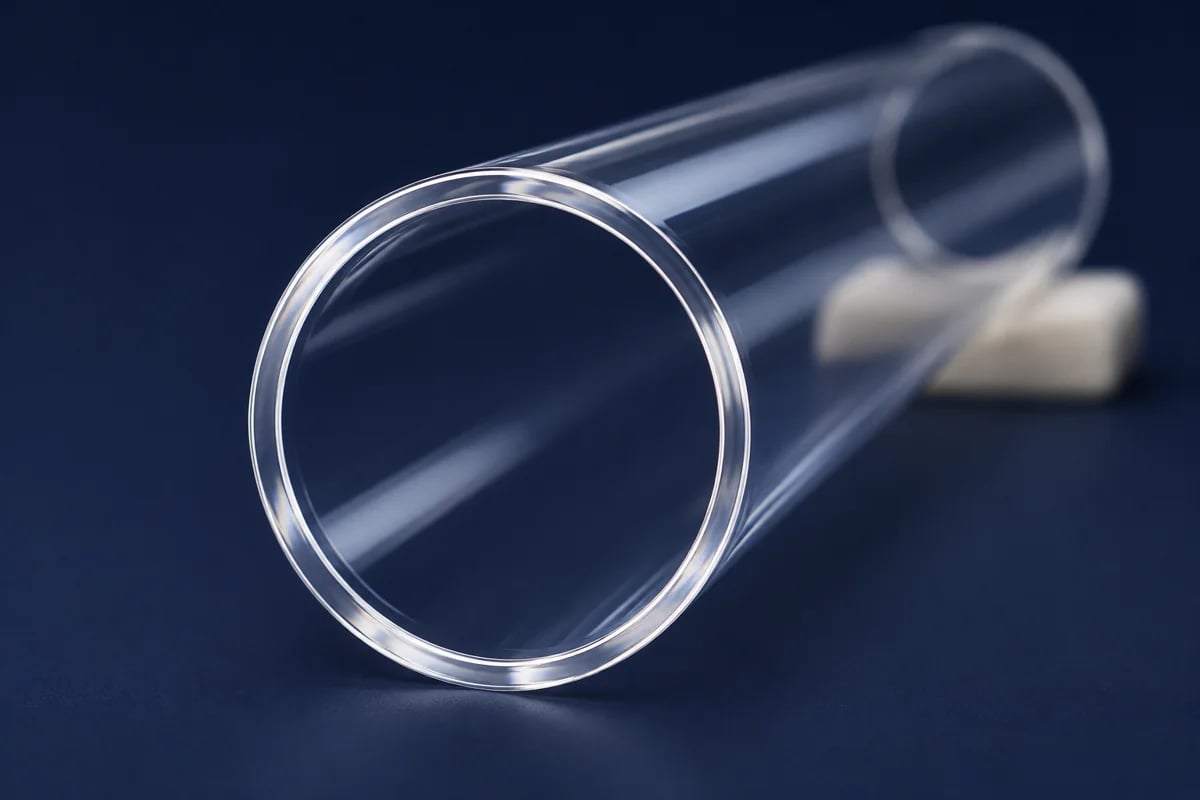
Semiconductor quartz
Semiconductor quartz — High purity for contamination-sensitive processes.
Quartz requirements vary with the semiconductor equipment, process chemistry and component design. Share the operating conditions and drawing for a project-specific review.
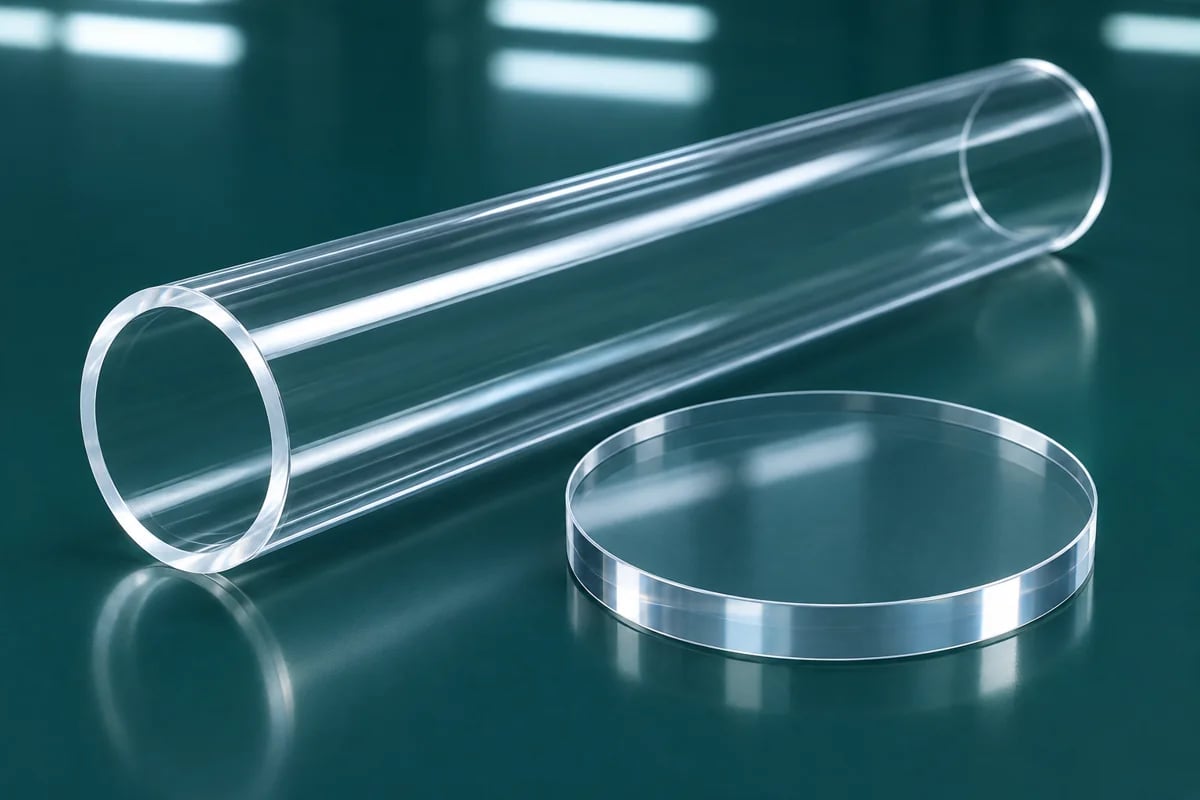
What to specify
- Material designation
- Silicon dioxide (SiO₂). Confirm the required quartz grade and material data sheet for the individual project.
- Process conditions
- Provide the operating temperature range and cycles, process chemistry and any specified trace-element limits.
- Part drawing and acceptance requirements
- Supply the drawing with dimensions, tolerances, mating interfaces and critical surfaces. Include any cleanliness, inspection or packaging requirements.
Material performance
Six-axis performance profile
- 1 Limited
- 2 Moderate
- 3 Strength
Bands run from the center outward. Unrated axes have no marker.
- HardnessUnrated
Heraeus reports Knoop hardness for fused quartz. An HV10 result is needed for this screening axis.
Heraeus fused quartz properties - Wear resistanceUnrated
Request wear data for the intended contact pair, load and abrasive medium. The quartz reference does not supply those results.
Heraeus fused quartz properties - High-temp strengthUnrated
Heraeus publishes softening and service temperatures for fused quartz. Load-bearing use needs separate strength data at the operating temperature.
Heraeus fused quartz properties - Thermal shockStrength
Heraeus attributes strong thermal-shock resistance to the low expansion of fused quartz. Geometry and surface condition govern the part’s response.
Heraeus fused quartz properties - Thermal conductivityLimited
Heraeus lists 1.38 W/(m·K) at 20 °C as a typical electrically fused quartz value.
Heraeus fused quartz properties - Corrosion / chemicalModerate
Heraeus describes fused quartz as resistant to water, salt solutions and many acids. Hydrofluoric acid, phosphoric acid and alkaline media can attack it.
Heraeus fused quartz properties
Material selection reference data
SiO₂ · Heraeus · HSQ 330
The values below apply to the cited manufacturer and grade. A dash means no comparable value was available in the cited source.
| Property | Reference value |
|---|---|
| Hardness (HV10, GPa) | — |
| Thermal conductivity (W/m·K) | 1.3820 °C, typical value for electrically fused quartz. |
| Thermal shock coefficient (R₁, K) | — |
Hardness testing standards for oxide and non-oxide ceramics differ. Compare values only when the method and test conditions match.
Heraeus quartz glass propertiesTest conditions and sources
Purity · trace sodium
Heraeus reports a typical sodium content of 0.1 ppm for HSQ 330. Hydrofluoric acid and alkaline media can attack fused quartz; check chemical compatibility under the actual process conditions.
Heraeus quartz glass properties
Related custom component examples
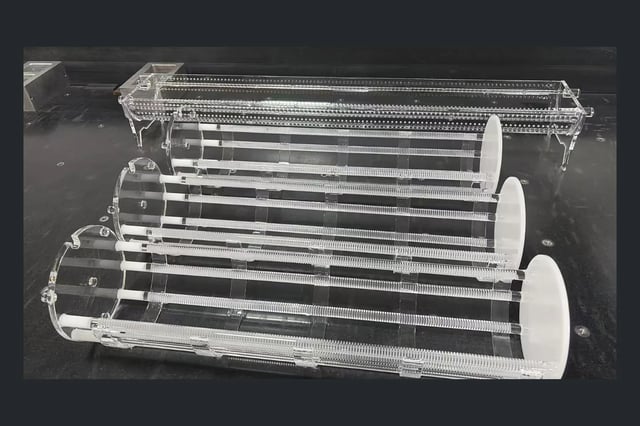
Discuss your semiconductor quartz component
Share the application, drawing, required grade or material data sheet, and estimated quantity so we can review your requirements.
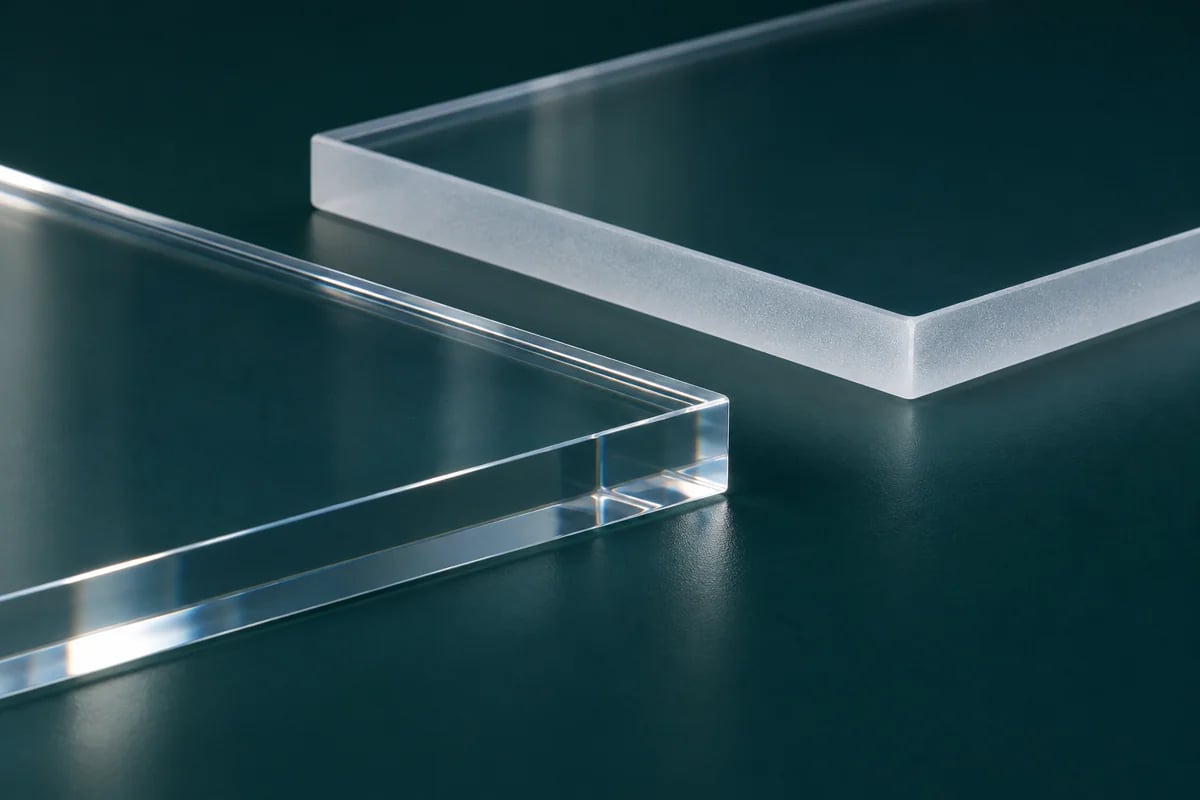
Request a quotePolished and ground quartz edges
Quartz tube bore and wall