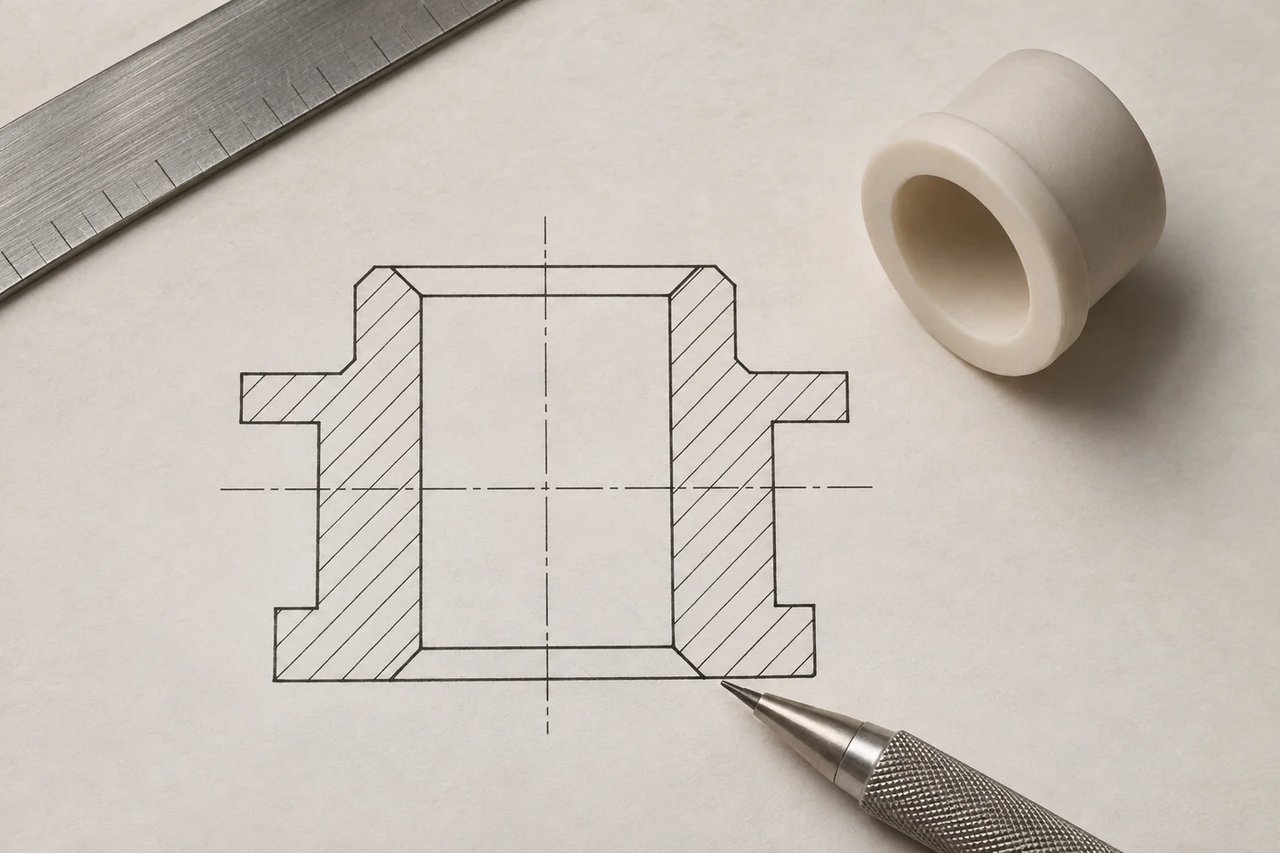
A ceramic drawing enquiry should let the supplier understand the part, review how it can be made and quote against an agreed scope. Send the controlled drawing together with the function, working conditions and quantities. If an item is undecided, mark it for review instead of allowing an assumption to become a purchase requirement.
What belongs in the enquiry pack?
1. Drawing control: part number, revision, units and the relationship between the 2D drawing and 3D model. Agree which document governs if they differ.
2. Material: required grade or composition, or the function that the material must fulfil. Ask which grade is offered and what documentation is included.
3. Operating conditions: temperature and cycling, media, loading, electrical needs, cleaning and mating materials. Ask which conditions the technical review considered.
4. Critical geometry: datums, mating dimensions, fits, position, flatness and surfaces that matter to function. Identify features needing finishing or extra inspection.
5. Surface and edges: required finish on named surfaces, edge treatment and any coating or glaze. Confirm when final dimensions are checked.
6. Quantity and timing: prototype and batch quantities, forecast if available and required delivery date. Clarify tooling, sample and production assumptions.
7. Acceptance records: dimensional report, material evidence, sample identification and functional checks. Agree who approves the first sample.
Mark critical features rather than making every tolerance tighter
Explain which dimensions locate the part, which surfaces touch the product and which clearances matter in the assembly. Ask the supplier to identify changes needed for the proposed forming and finishing route. Morgan's design guide discusses grinding after firing, wall transitions and edge treatments; its guidance is process-specific, so it should prompt a review rather than be copied into a blanket drawing note.
Use the same revision for the drawing, the quotation and the sample inspection report. If a feature is changed during feasibility review, record the approved change. Avoid treating an informal email sketch as the final manufacturing instruction.
Separate material selection from finished-part acceptance
A material family name is not a grade specification. If the material is undecided, describe the function and ask for the proposed grade, the reason for proposing it and the relevant data. If the grade is fixed, state whether substitutions require written approval.
Define finished-part checks separately from material paperwork. A dimensional report, a grade declaration and an assembly test answer different questions. Agree the measurements, reporting format and sample decision before the production order.
Make the quotation and sample decision comparable
The German ceramics industry association's technical handbook explains why drawings, function and planned lot sizes matter at the start of development. Put these inputs in one enquiry pack and ask suppliers to list exclusions and proposed deviations. Compare tooling, sample, production and inspection costs on the same scope; clarify packaging and delivery terms in the offer.
For the first sample, record what it should prove, how it will be assessed and what decision follows. Sample approval and later changes should refer to the agreed drawing and acceptance plan.
Start from a listed ceramic component or your own drawing
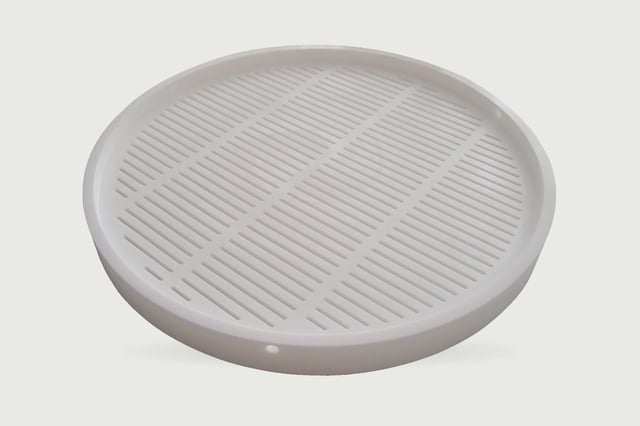
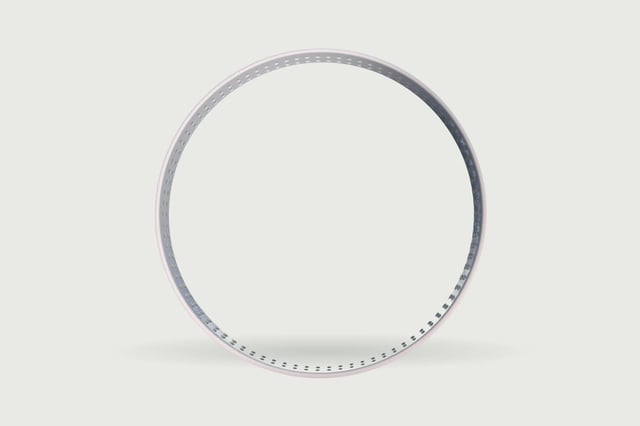
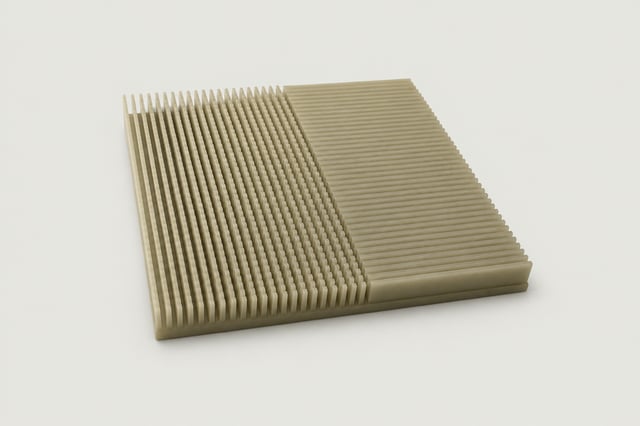
The alumina ceramic ring, aluminum nitride ceramic plate and grooved zirconia ceramic disc are useful starting points for different functions and shapes. Confirm grade, geometry and acceptance requirements for your own component; a catalogue image does not define the ordered part.
Send a ceramic drawing enquiry with the part reference, revision, quantity and the questions that need review. The form does not upload drawings. Describe what is available and arrange a suitable channel for confidential files.
Sources and scope
This purchasing checklist draws on KYOCERA's ceramic material overview, Morgan Technical Ceramics' component design guide and the German ceramics industry association's design sequence, linked below. It does not set universal tolerances or verify a particular supplier's manufacturing process. The project quotation and agreed technical documents define the supply scope.